
Anúncios
The human mind is a remarkable organ, capable of seamlessly shifting between rigid logic and unbounded creative expression, transforming abstract concepts into vivid mental landscapes.
🧠 The Bridge Between Two Worlds
For centuries, scholars, artists, and scientists have pondered the mysterious relationship between logical thinking and creative imagination. These two cognitive processes, often perceived as opposing forces, actually work in harmonious tandem within our minds. Logic provides the structure, the framework upon which creativity can build its most spectacular creations. Meanwhile, creativity breathes life into logical constructs, transforming cold calculations into meaningful experiences that resonate with human emotion and understanding.
Anúncios
The transformation from pure logic to vivid imagery represents one of the most fascinating aspects of human cognition. When we solve a complex mathematical problem, our brain doesn’t simply process numbers and symbols—it creates mental models, visual representations, and even emotional responses to abstract concepts. This cognitive alchemy allows us to understand quantum physics through metaphors, grasp infinity through imagination, and comprehend the incomprehensible through creative visualization.
The Neuroscience of Creative Logic 🔬
Modern neuroscience has revealed that the division between logical and creative thinking is far less pronounced than previously believed. Brain imaging studies demonstrate that when individuals engage in creative problem-solving, multiple regions of the brain activate simultaneously, including areas traditionally associated with both analytical reasoning and imaginative thinking.
Anúncios
The prefrontal cortex, responsible for executive functions and logical reasoning, works in concert with the default mode network, which governs imagination and spontaneous thought. This collaboration creates what researchers call “creative cognition”—a state where logic and imagination merge to produce innovative solutions and novel ideas.
Recent studies have shown that individuals who excel in both logical and creative domains exhibit stronger neural connections between the brain’s analytical and imaginative regions. This suggests that the ability to transform logic into imagery isn’t just a talent—it’s a skill that can be developed through practice and intentional training.
Historical Masters of Logical Creativity 🎨
Throughout history, many influential figures have demonstrated the powerful synergy between logic and creativity. Leonardo da Vinci embodied this union perfectly, combining mathematical precision with artistic brilliance. His anatomical drawings weren’t merely artistic representations—they were logical studies transformed into visual masterpieces that advanced both art and science.
Albert Einstein famously relied on thought experiments, transforming complex mathematical equations into vivid mental imagery. His visualization of riding alongside a beam of light led to revolutionary insights about space and time. Einstein once remarked that he rarely thought in words, instead relying on visual and muscular sensations that he later translated into mathematical language.
Similarly, Nikola Tesla possessed an extraordinary ability to visualize complex electrical systems in his mind with such clarity that he could mentally test his inventions before building physical prototypes. This marriage of technical knowledge and vivid imagination allowed him to revolutionize electrical engineering and create technologies that shaped the modern world.
The Creative Logic Framework 🌟
Understanding how logic transforms into creativity requires recognizing the stages of this cognitive metamorphosis. The process typically unfolds through several distinct phases, each building upon the previous one to create increasingly sophisticated mental representations.
Stage One: Logical Foundation
Every creative insight begins with a foundation of knowledge and logical understanding. Before we can imagine new possibilities, we must first comprehend the existing rules, patterns, and relationships that govern a particular domain. This logical framework provides the scaffolding upon which creative thoughts can construct novel ideas.
Mathematicians must master fundamental principles before they can discover new theorems. Musicians must understand musical theory before they can compose innovative harmonies. Artists must learn the properties of light, color, and perspective before they can break traditional rules in meaningful ways.
Stage Two: Pattern Recognition
Once logical foundations are established, the mind begins identifying patterns and connections. This stage represents the first transformation point where pure logic starts evolving into something more dynamic. The brain automatically searches for similarities, analogies, and relationships that might not be immediately obvious.
Pattern recognition allows us to apply knowledge from one domain to solve problems in completely different areas. This cross-pollination of ideas forms the basis of analogical thinking, which many researchers consider essential for creative breakthroughs.
Stage Three: Imaginative Expansion
With patterns recognized, the imagination takes over, expanding possibilities beyond conventional boundaries. This stage involves mental experimentation—asking “what if” questions and exploring hypothetical scenarios. Logic provides constraints that keep these imaginative explorations grounded in possibility rather than pure fantasy.
During this phase, vivid mental imagery emerges. Abstract concepts take on visual, auditory, or even tactile qualities. Mathematical relationships might appear as geometric shapes dancing through space. Musical compositions might manifest as color patterns or emotional landscapes.
Practical Techniques for Unlocking Creative Logic 🔓
Developing the ability to transform logical thinking into creative imagery requires deliberate practice and specific techniques. These methods help strengthen the neural pathways connecting analytical and imaginative regions of the brain.
Visualization Exercises
Regular visualization practice trains the mind to create rich mental imagery from abstract information. Start with simple geometric shapes and gradually progress to more complex systems. Try visualizing mathematical equations as physical objects or imagine how a logical argument might look if represented as a landscape or architectural structure.
Spend ten minutes daily visualizing increasingly complex scenarios. Begin with familiar objects, then progress to abstract concepts, and finally to dynamic processes and systems. This progressive training builds cognitive flexibility and strengthens the mind’s ability to translate between different modes of representation.
Mind Mapping and Visual Note-Taking
Traditional note-taking often remains trapped in linear, text-based formats that engage primarily logical processing. Mind mapping and visual note-taking techniques encourage the brain to create spatial relationships and visual connections between ideas, activating both logical and creative cognitive processes simultaneously.
When learning new concepts, create visual diagrams that represent relationships between ideas. Use colors, symbols, and spatial arrangements to encode information in ways that engage multiple cognitive systems. This approach not only improves memory retention but also enhances creative thinking by establishing new neural associations.
Analogical Thinking Exercises
Practice finding analogies between unrelated domains. How is a business organization like a biological organism? How does electrical current flow resemble water moving through pipes? These comparisons force the brain to identify structural similarities beneath surface differences, strengthening the ability to transform abstract logic into concrete imagery.
Create daily challenges where you explain complex concepts using entirely different domains. Describe computer algorithms using cooking metaphors. Explain economic principles through ecological analogies. These exercises build cognitive bridges that facilitate the transformation of logic into creative expression.
The Role of Constraints in Creative Liberation 🎯
Paradoxically, constraints often enhance rather than limit creativity. When logic provides clear boundaries, the imagination can explore more freely within those defined spaces, creating solutions that are both innovative and practical. This principle explains why creative breakthroughs often emerge when solving specific, well-defined problems rather than pursuing completely open-ended exploration.
Artists working within strict formal requirements often produce more innovative work than those with complete freedom. The sonnet’s rigid structure challenged poets to achieve emotional expression within tight constraints, leading to some of literature’s most celebrated works. Similarly, architects designing within budget limitations, building codes, and site restrictions often create more interesting solutions than when given unlimited resources.
The key lies in viewing constraints not as obstacles but as creative catalysts. Each limitation eliminates countless trivial options, focusing mental energy on discovering truly novel solutions that satisfy all requirements simultaneously. This focused exploration generates the tension necessary for creative breakthroughs.
Digital Tools for Enhancing Creative Logic 💻
Modern technology offers unprecedented opportunities for developing the ability to transform logical thinking into creative expression. Various applications and platforms can help train the mind to move fluidly between analytical and imaginative modes.
Digital mind mapping tools allow users to create dynamic visual representations of logical relationships, making abstract connections tangible and manipulable. 3D modeling software enables logical design principles to manifest as vivid visual creations. Music production applications transform mathematical relationships between frequencies into audible artistic expressions.
Programming environments provide particularly rich opportunities for combining logic and creativity. Writing code requires precise logical thinking, yet the outcomes can be visually stunning animations, interactive art installations, or innovative user experiences. This fusion of technical precision and creative vision exemplifies the transformation of logic into vivid imagery.
Overcoming Mental Blocks and Rigid Thinking 🚧
Many people struggle to transform logic into creativity because they’ve developed rigid thinking patterns that compartmentalize these cognitive processes. Educational systems often reinforce this separation by treating mathematics, science, and arts as entirely distinct disciplines requiring fundamentally different mental approaches.
Breaking free from this mental rigidity requires conscious effort and patience. Begin by challenging the assumption that logical and creative thinking are opposites. Recognize that every mathematical equation tells a story, every scientific theory represents an imaginative leap, and every work of art embodies logical decisions about composition, color, and form.
Practice switching between analytical and creative modes rapidly. Spend five minutes analyzing a painting’s compositional geometry, then five minutes imagining the emotional journey the artist experienced while creating it. Alternate between calculating the mathematical ratios in a musical harmony and improvising variations on the melody. This mental flexibility training gradually dissolves the artificial boundaries between logic and creativity.
The Future of Integrated Thinking 🚀
As we advance into an increasingly complex future, the ability to seamlessly integrate logical and creative thinking becomes ever more valuable. The challenges facing humanity—climate change, technological ethics, social inequality—require solutions that are simultaneously technically sound and imaginatively bold. We need thinkers who can transform scientific data into compelling narratives, engineers who can envision human-centered technologies, and artists who can encode profound truths in logical structures.
Educational reforms are beginning to recognize this need, with progressive schools implementing STEAM curricula that integrate arts with traditional STEM subjects. These programs acknowledge that separating logic from creativity produces incomplete thinkers, whereas combining these approaches develops minds capable of addressing multifaceted challenges from multiple perspectives simultaneously.
The workplace of the future will increasingly value individuals who can perform this cognitive alchemy—transforming market data into strategic visions, converting user needs into elegant design solutions, and translating abstract possibilities into concrete innovations. Those who master the art of unlocking their minds to move freely between logic and creativity will find themselves uniquely positioned to thrive in this evolving landscape.
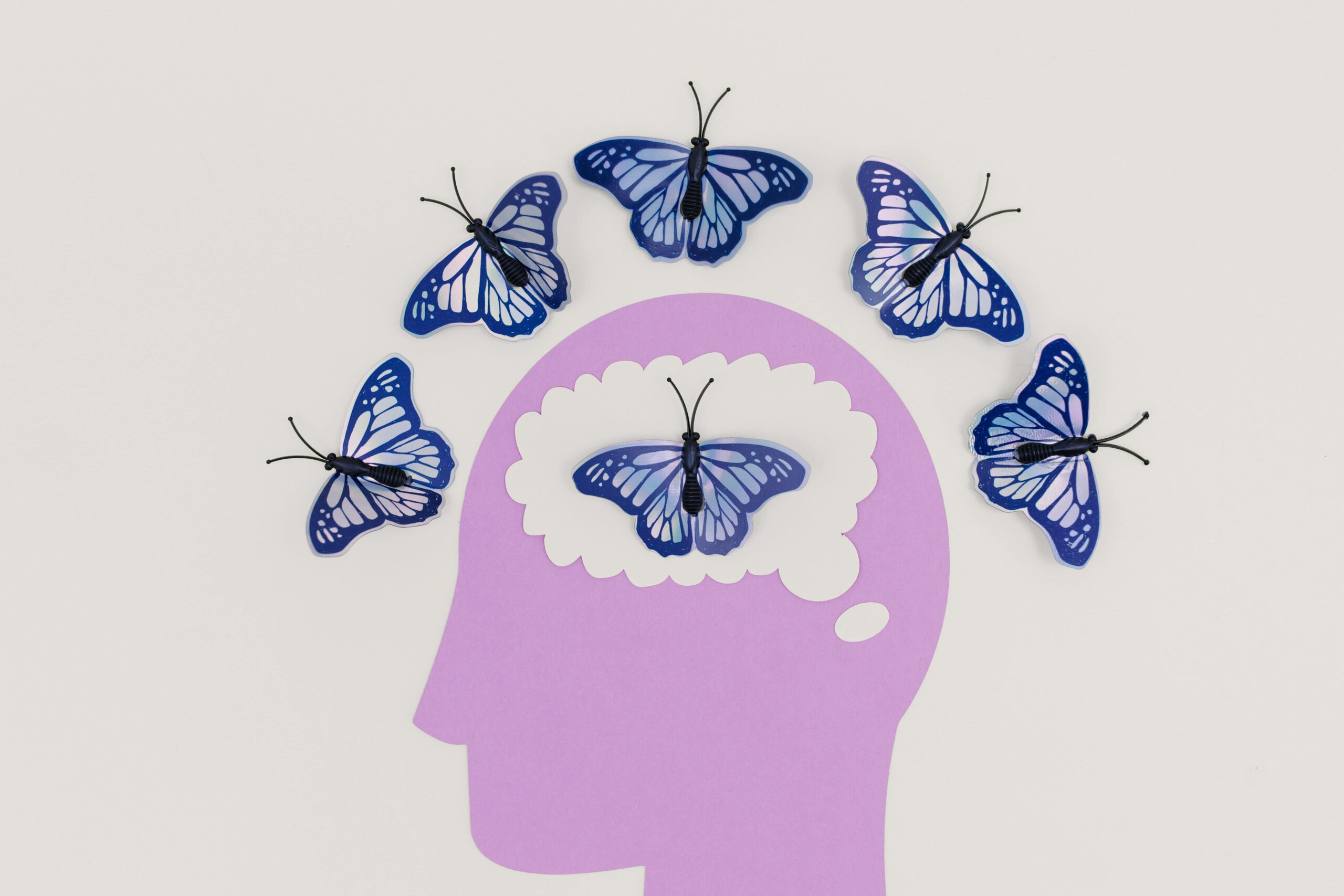
Cultivating Your Mental Metamorphosis 🦋
The journey from rigid logical thinking to fluid creative expression is deeply personal, requiring self-awareness, patience, and persistent practice. Begin by observing your own thought patterns without judgment. Notice when you default to purely analytical processing and when imagination takes over. Recognize that both modes have value and that the goal isn’t to favor one over the other but to develop the ability to access both as circumstances require.
Create daily rituals that exercise both logical and creative muscles. Solve a puzzle or mathematical problem to engage analytical thinking, then immediately switch to free-form drawing or creative writing to activate imagination. This deliberate alternation builds neural pathways that facilitate rapid transitions between cognitive modes.
Seek out experiences that naturally blend logic and creativity. Learn a musical instrument, which requires technical precision and emotional expression. Take up photography, which combines technical understanding of light and composition with artistic vision. Explore chess, programming, architecture, or any discipline where logic and creativity dance together.
Most importantly, embrace the discomfort of this cognitive expansion. The mind naturally resists change, preferring established patterns even when they limit potential. Pushing beyond these comfort zones creates temporary confusion and frustration, but this mental stretching is precisely what builds new neural connections and expands cognitive capabilities.
The Magnificent Synthesis ✨
The transformation of logic into vivid imagery and boundless creativity represents one of the human mind’s most remarkable capacities. This cognitive metamorphosis allows us to solve complex problems, create meaningful art, develop innovative technologies, and understand abstract concepts through concrete experiences. By recognizing that logic and creativity are complementary rather than contradictory forces, we unlock mental potentials that remain dormant when we artificially separate these processes.
Every great achievement in human history has required this synthesis—the scientist’s logical rigor channeled through creative insight, the artist’s imaginative vision grounded in technical mastery, the philosopher’s abstract reasoning made tangible through compelling metaphors. As individuals develop this integrated thinking capacity, they don’t simply become better at solving problems or creating art—they fundamentally transform how they experience and interact with reality itself.
The mind unlocked, free to move between structured logic and boundless imagination, discovers that these aren’t separate destinations but complementary aspects of a unified cognitive landscape. In this integrated state, every logical problem becomes an opportunity for creative exploration, and every imaginative vision finds grounding in coherent structure. This is the magnificent synthesis that defines human potential at its highest expression—the seamless flow between reason and imagination, transforming abstract thought into vivid reality.
