
Anúncios
There’s something irresistibly magnetic about spaces designed for temporary occupation—places where lingering feels forbidden, where every instinct whispers you should move along. Yet we’re drawn to them.
🚪 The Psychology Behind Forbidden Spaces
Human curiosity has always been sparked by boundaries and limitations. When we encounter spaces marked by “no entry” signs or locations that seem inherently transient, our brains activate a complex response mechanism. This isn’t mere rebelliousness; it’s an evolutionary trait that once helped our ancestors explore and understand their environment.
Anúncios
Psychologists refer to this phenomenon as “reactance theory”—when our freedom feels threatened or restricted, we experience a motivational arousal to restore that freedom. Places you’re not meant to stay trigger this exact response, creating an almost irresistible pull toward the prohibited or temporary.
The unsettling nature of these spaces also taps into our fascination with liminality—those in-between states that exist outside normal structures. Airport terminals at 3 AM, empty subway stations, abandoned buildings waiting for demolition—these locations occupy a psychological space between destinations, neither here nor there.
Anúncios
The Architecture of Transience
Certain spaces are deliberately designed to discourage prolonged presence. Urban planners and architects employ specific techniques to ensure people keep moving through rather than settling in. These design choices create an inherent tension between our natural desire to rest and the environment’s insistence that we don’t.
Hostile Architecture and Subtle Deterrents
Modern cities increasingly feature “defensive architecture”—benches with armrests dividing sitting spaces, sloped surfaces that prevent lying down, and lighting that shifts color to reveal skin imperfections. These design elements communicate a clear message: you may pass through, but you cannot stay.
The unsettling quality of these spaces emerges from this contradiction. They’re public yet unwelcoming, accessible yet inhospitable. This cognitive dissonance creates psychological discomfort that some find strangely compelling.
- Seating designed to be uncomfortable after 20 minutes
- Temperature control that discourages loitering
- Audio frequencies that irritate young adults specifically
- Lighting schemes that create unease rather than comfort
- Spatial layouts that naturally funnel people through quickly
🏚️ Abandoned Places: Where Time Stands Uncomfortably Still
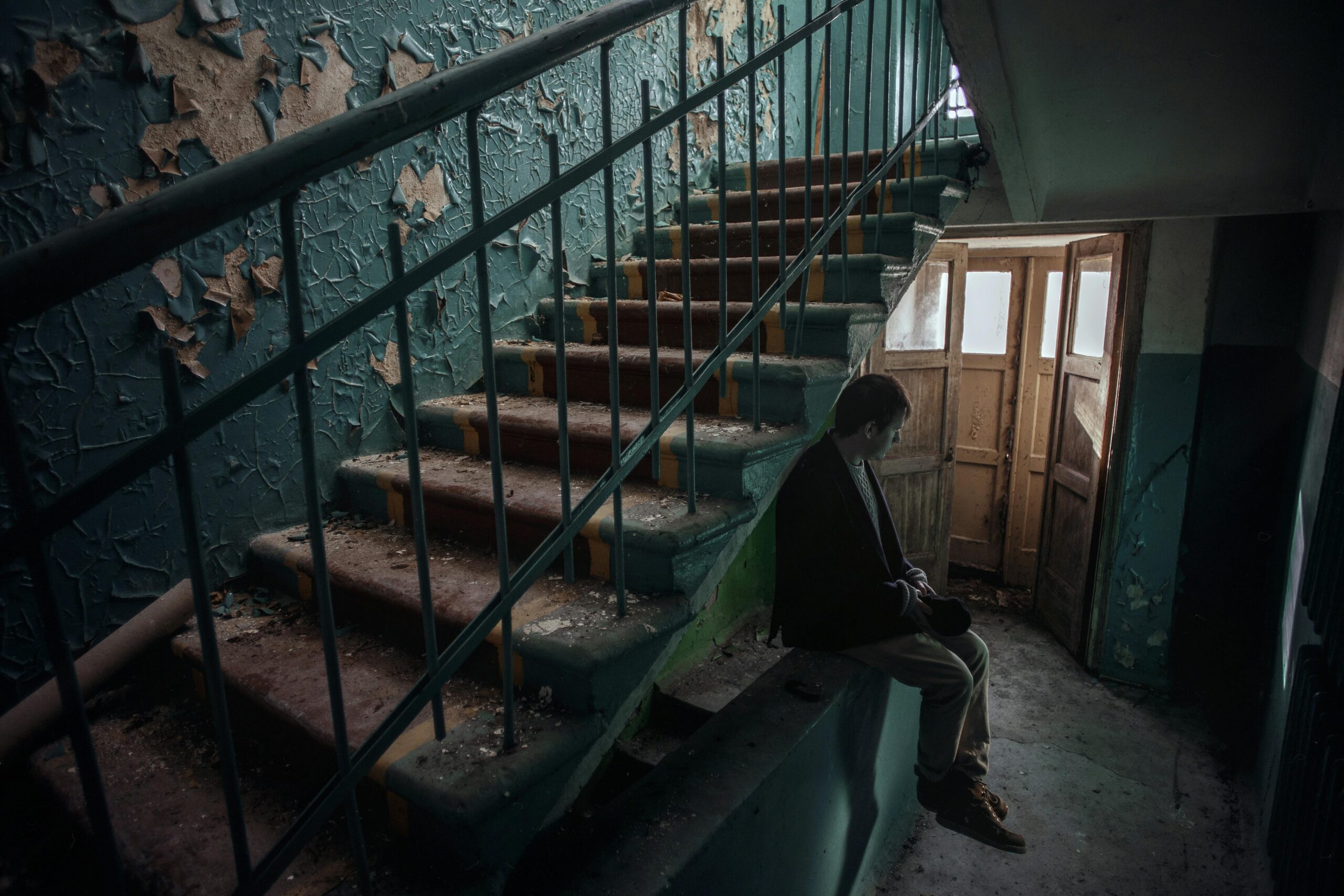
Perhaps no category captures our imagination quite like abandoned locations—places that once buzzed with human activity now frozen in eerie silence. These spaces weren’t meant for staying even when operational, and their abandonment intensifies that quality exponentially.
Defunct shopping malls, closed amusement parks, decommissioned hospitals, and empty office buildings represent failed promises of permanence. They’re monuments to impermanence, physical proof that everything designed for human habitation eventually becomes uninhabitable.
The Urban Exploration Movement
The rise of urban exploration—”urbex” in enthusiast circles—demonstrates how powerfully these forbidden spaces attract us. Despite legal risks and physical dangers, thousands venture into abandoned structures to document decay, capture haunting photographs, and experience the thrill of occupying spaces explicitly off-limits.
This phenomenon has spawned countless social media accounts, YouTube channels, and entire subcultures devoted to exploring and documenting places where humans no longer belong. The aesthetic of decay has become its own genre, with practitioners treating abandoned spaces as both adventure playgrounds and meditation sites on mortality.
Transit Zones: The Poetry of Passing Through
Some of the most psychologically complex spaces are those designed entirely around movement—locations that exist solely to facilitate getting somewhere else. These transit zones occupy a peculiar position in our mental geography.
Airports epitomize this category. They’re nowhere places, disconnected from the cities that host them, existing in perpetual international limbo. The longest you’re “meant” to stay in an airport is the duration between flights, yet some people find themselves stranded for days, even weeks, occupying a space fundamentally inhospitable to extended habitation.
The Haunting Quality of Empty Transit Spaces ⏰
Transit locations become especially unsettling when encountered outside their intended temporal context. An empty bus station at midnight transforms from a space of purposeful movement into something that feels almost post-apocalyptic. The fluorescent lights still hum, the ticket machines still glow, but the absence of crowds renders everything uncanny.
These moments reveal the true character of spaces designed purely for efficiency rather than comfort. Without the distraction of crowds and purpose, we notice the hard surfaces, the absence of homey touches, the subtle hostility embedded in every design choice.
Hotels and the Paradox of Temporary Home
Hotels present a fascinating paradox—they’re designed for staying, but only temporarily. They mimic domesticity while remaining fundamentally alien. This tension between hominess and strangeness creates a peculiar psychological space that many find both comforting and deeply unsettling.
The generic quality of hotel rooms contributes to their strangeness. They’re everywhere and nowhere simultaneously, deliberately stripped of particularity to appeal to everyone. This universality creates a kind of placelessness that some travelers find disorienting.
When Hotels Become Too Permanent
What happens when people live in hotels long-term? The psychological effects can be profound. Without the personalization and rootedness of a genuine home, long-term hotel residents often report feeling unmoored, living in a perpetual state of transition that takes a mental toll.
This phenomenon illuminates an essential truth about places not meant for staying: they lack what environmental psychologists call “place attachment”—the emotional bonds we form with locations through repeated positive experiences and personalization over time.
🎭 The Aesthetic Appeal of Liminal Photography
The internet has popularized “liminal space” photography—images of transitional locations that evoke inexplicable nostalgia and unease. These photographs typically feature empty hallways, vacant playgrounds at dusk, or deserted parking garages—all spaces people pass through but don’t inhabit.
This aesthetic taps into something primal in our psychology. These spaces feel simultaneously familiar and alien, triggering what psychologists call “uncanny valley” responses typically associated with almost-but-not-quite-human robots or CGI characters.
| Liminal Space Type | Emotional Response | Psychological Trigger |
|---|---|---|
| Empty shopping malls | Nostalgia + unease | Absence where crowds should be |
| School hallways after hours | Eerie familiarity | Temporal displacement |
| Hotel corridors | Mild anxiety | Repetition and sameness |
| Underground parking | Primal fear response | Isolation and vulnerability |
| Rest stop bathrooms | Disgust + hurry | Hygiene concerns and transience |
The Dark Tourism Connection
Our fascination with places we shouldn’t stay connects deeply with dark tourism—travel to sites associated with death, suffering, or disaster. Places like Chernobyl, Auschwitz, or disaster zones attract visitors precisely because they’re locations where normal human habitation has been catastrophically interrupted.
These destinations carry an implicit understanding: you’re a temporary observer of spaces where others couldn’t leave, where staying meant danger or death. This creates a profound psychological experience that combines privilege, guilt, education, and morbid fascination.
Ethical Considerations in Forbidden Space Exploration
As interest in abandoned and liminal spaces grows, ethical questions emerge. When does exploration become exploitation? How do we balance curiosity with respect for private property, historical significance, and safety concerns?
Urban explorers debate these questions constantly. Many adopt a “take only pictures, leave only footprints” philosophy, while critics argue that any unauthorized entry constitutes trespassing and potentially damages fragile structures or disturbs sites of cultural importance.
🌃 The Night Shift Perspective
People who work overnight in typically busy spaces—security guards in office buildings, cleaners in shopping centers, night shift workers in hospitals—experience familiar places transformed into something strange. They occupy spaces during hours when those locations become places you’re not meant to be.
These workers report a particular kind of psychological experience. The familiar becomes unfamiliar; everyday spaces take on haunted qualities when stripped of their usual human activity. Sounds seem louder, shadows deeper, and the artificial environment feels more apparent without crowds to normalize it.
This transformation reveals something fundamental about how we relate to spaces. It’s not just the physical architecture that makes a place feel right for human occupation—it’s the presence of other humans, the ambient noise of activity, the signs of ongoing life.
Digital Liminal Spaces and Virtual Abandonment
The concept of places not meant for staying has evolved into digital realms. Abandoned websites, empty multiplayer game servers, and defunct social media platforms create virtual liminal spaces with their own particular atmosphere of unsettling nostalgia.
Visiting a once-popular online forum now hosting only spam bots creates an experience remarkably similar to walking through an abandoned shopping mall. The digital architecture remains intact, but the human presence that gave it meaning has vanished, leaving only a shell.
The Backrooms Phenomenon
Perhaps nothing demonstrates our cultural fascination with unwelcoming spaces better than “The Backrooms”—a collaborative internet horror fiction describing endless yellow office spaces representing a sort of cosmic mistake, places that exist but shouldn’t, that you can accidentally enter but struggle to leave.
This concept resonates because it captures something essential about liminal spaces: the feeling that you’ve somehow glitched outside normal reality into maintenance areas of existence itself, places the universe never intended humans to see or occupy.
🧠 Why We Keep Returning to Uncomfortable Spaces
Given that these spaces are designed to repel prolonged occupation or carry inherent dangers, why do we seek them out? The answer lies in several intersecting psychological and cultural factors that make discomfort occasionally desirable.
First, these spaces offer contrast to our heavily curated, comfortable lives. In an era of optimization and convenience, intentionally occupying unwelcoming spaces provides a form of controlled adversity—a way to feel something intense without genuine danger.
Second, they offer solitude increasingly rare in crowded urban environments. Precisely because these spaces discourage staying, they tend to be empty, providing a peculiar form of privacy and contemplative space.
Third, they remind us of impermanence and mortality in ways our sanitized daily environments carefully avoid. Abandoned buildings and hostile architecture confront us with decay, failure, and the temporary nature of all human endeavors.
Creating Intentional Liminal Experiences
Some artists and experience designers now deliberately create spaces that evoke this unsettling transitional quality. Immersive theater productions, experimental architecture, and art installations increasingly explore the aesthetic and psychological territory of places that resist habitation.
These intentional liminal spaces allow people to safely experience the psychological effects of transitional environments without actual risk. They democratize the urbex experience while raising questions about whether recreating these sensations diminishes their power.
🗺️ Finding Meaning in the Temporary
Our relationship with places we’re not meant to stay ultimately reveals something profound about human nature. We’re simultaneously creatures seeking stability and explorers drawn to boundaries. We build permanent structures while remaining fascinated by decay and transition.
These uncomfortable spaces serve as reminders that not all of life is meant to be comfortable, that transition and impermanence are fundamental to existence. They teach us that sometimes the most meaningful experiences occur in places designed to be passed through rather than inhabited.
The allure of these spaces won’t diminish as long as humans remain curious about boundaries, fascinated by forbidden knowledge, and drawn to experiences that remind us we’re alive precisely because they make us slightly uncomfortable.
Perhaps the greatest lesson these spaces offer is that meaning doesn’t require permanence. A moment of connection in a bus station at midnight, a photograph captured in an abandoned building, or the strange peace found in an empty airport terminal can resonate as powerfully as experiences in places designed for comfort and extended occupation.
We’ll continue exploring these edges of habitability, seeking out the places that push back against our presence, because they offer something increasingly rare: genuine strangeness in a world growing more uniform, authentic discomfort in an age of engineered convenience, and honest reminders that we’re just passing through.
